If you have ever eaten at an authentic traditional restaurant in Seoul, you have probably noticed something highly unusual on the table: Korean metal chopsticks (Sae-jeotgarak / 쇠젓가락).
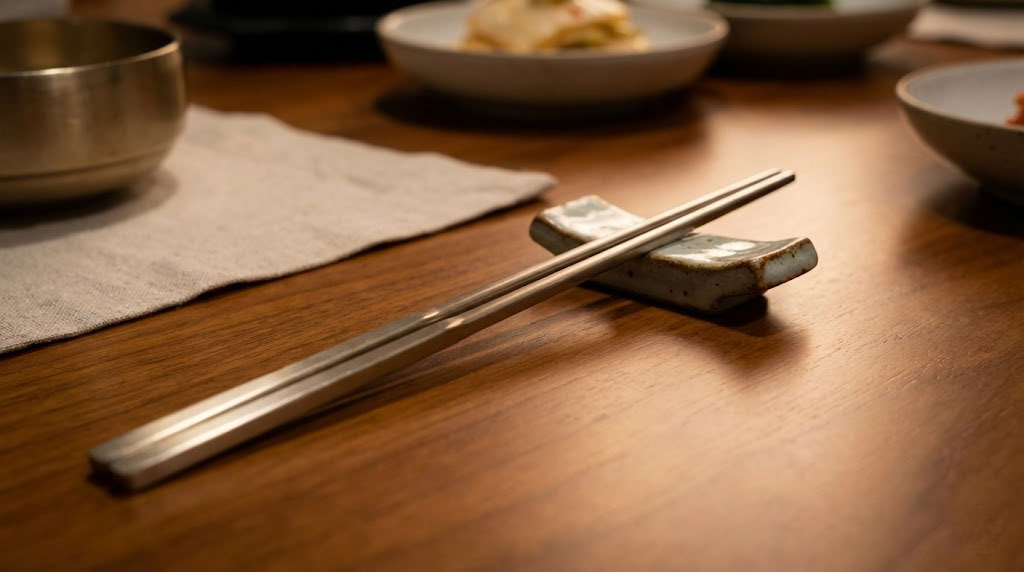
Unlike the utensils used in neighboring countries, they are uniquely flat, surprisingly thin, and made of solid, heavy stainless steel. They feel significantly heavier in the hand than traditional wooden versions and do not grip the food in the exact same way. At first attempt, they can seem very difficult for foreigners to use.
If you have ever wondered why locals use metal instead of wood or bamboo like Japan and China, the answer is a fascinating combination of ancient royal history, traditional dining culture, and a remarkably strict modern preference for kitchen hygiene.
The Royal Origin of Korean Metal Chopsticks
The use of metal utensils on the peninsula dates back thousands of years to the ancient Baekje Kingdom (18 B.C. – 660 A.D.).
During this era, royal families and high-ranking officials had one major, constant concern: food poisoning by political assassins. To combat this, the royal court began exclusively using pure silver chopsticks. Historically, silver was widely believed to chemically react and change color if it came into contact with certain lethal poisons (such as arsenic) hidden in the food.
While modern science heavily debates how chemically effective this method actually was, metal utensils quickly became the ultimate symbol of extreme food safety, high social status, and immense wealth. Over centuries, the expensive silver evolved into practical brass for the middle class, and eventually into the highly durable stainless steel Korean metal chopsticks widely utilized in modern households today.
Why Are They Flat Instead of Round?
Unlike perfectly round Japanese wooden chopsticks or thick, squared Chinese bamboo ones, the Korean iteration is uniquely flat and rectangular. There are two highly practical, cultural reasons for this flat architecture:
1. Stability on Traditional Portable Tables
Traditional Korean dining did not happen at a large, stationary dining table. Instead, meals were served on small, portable, individual wooden tables called Soban (소반). Women historically had to physically carry these fully loaded tables from the outdoor kitchen across the courtyard to the living spaces. If the chopsticks were perfectly round, they would easily roll off the table during movement. Flat chopsticks, however, stay exactly where they are placed.
2. Cutting and Tearing Fermented Food
Korean cuisine includes a massive variety of shared side dishes (Banchan / 반찬), such as massive leaves of whole cabbage Kimchi or large, thick pieces of braised tofu. The surprisingly thin, rectangular edge of Korean metal chopsticks works almost like a dull blade, helping diners effortlessly slice, separate, or tear food directly on the shared plate.
The Hygiene Advantage of Korean Metal Chopsticks
Modern domestic kitchens in South Korea prioritize sanitation and long-term durability above all else.
Wooden and bamboo chopsticks are naturally porous materials. Over time, they inevitably absorb moisture, chemical dish soap, and microscopic food particles. Eventually, this traps bacteria and physically degrades the wood, requiring frequent replacement.
In sharp contrast, high-quality stainless steel utensils are mathematically superior for hygiene. They are:
- 100% non-porous and impenetrable.
- Completely dishwasher-safe and heavily boil-safe (for sterilization).
- Highly resistant to aggressive stains (like red chili paste) and deep odors (like raw garlic).
👉 (This is the exact same hygienic philosophy behind the country’s preference for metal food storage! Read more here: [Best Stainless Steel Food Containers for Kimchi])
The Traditional Sujeo Set (수저 세트)
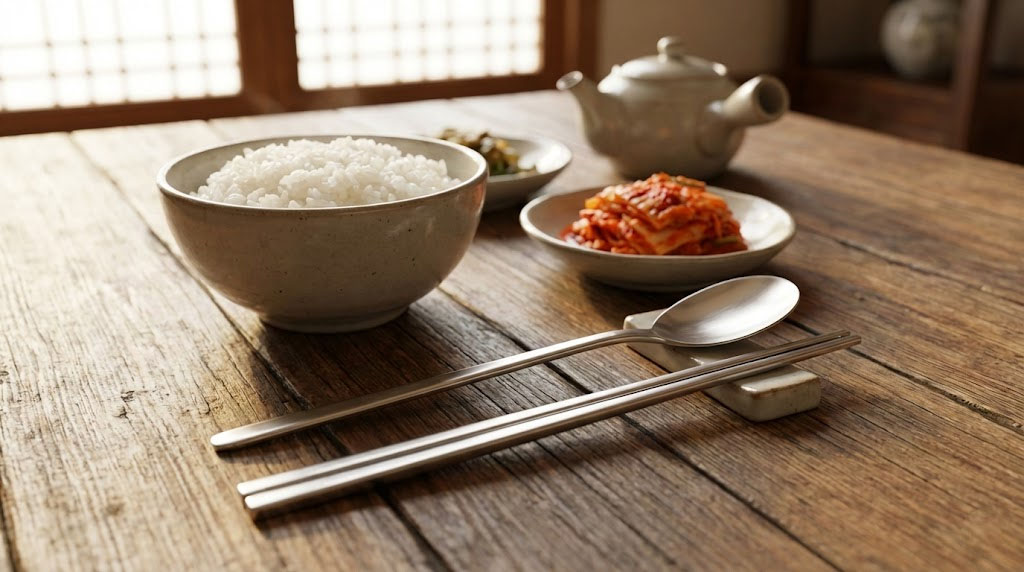
In authentic dining, these chopsticks are rarely utilized alone. They are almost always paired with a matching, long-handled metal spoon. Together, this vital combination is called a Korean Sujeo set (수저 세트).
The spoon is absolutely essential for consuming rice and boiling stews (Jjigae 찌개), which form the nutritional core of any traditional meal.
The Anatomy of Modern Utensils
When examining modern Korean metal chopsticks in a contemporary household, the manufacturing reflects strict culinary standards. They are typically forged from food-grade 304 stainless steel.
While traditionalists prefer the heavy, solid steel versions, modern manufacturing has introduced “hollow” variations. These hollow metal chopsticks maintain the iconic flat shape and hygienic benefits but are significantly lighter, reducing hand fatigue during long, multi-course meals. Additionally, many modern designs feature a subtly frosted or micro-textured tip, engineered specifically to provide extra friction when gripping slippery glass noodles (Japchae 잡채).
Conclusion
They are not just eating utensils; they are a direct reflection of South Korea’s complex history. From royal poison detectors to modern hygienic marvels, they perfectly embody a culture that values permanence, cleanliness, and practical design.
🔜 Next Post Teaser
You now understand the fascinating history of metal chopsticks, the science behind the pink rubber gloves, and the practicality of the stainless steel containers.
You have learned about the tools, but what about the broader philosophy that ties all of these unique items together? Why does a typical Korean kitchen look and function so differently from a standard Western one?
It is time to look at the big picture.
Next up: [Korean Kitchen Culture: A Practical Guide to Tools and Daily Habits]
🔙 Previous Post
← Previous Post [Korean Rubber Gloves: 5 Reasons Every Kitchen Uses Them]