If your homemade instant noodles never seem to work out and your broth still tastes flat or overly salty, you are not alone.
Most people outside of Korea cook Shin Ramyun the exact same way: boil water, dump in the seasoning powder, add the dry noodles, and eat. That method works if you are in a rush, but the flavor profile remains basic and boring.
For Koreans, Shin Ramyun is not just cheap fast food. It is considered a culinary base that can be easily upgraded with a few small, traditional tweaks. If you want your bowl to taste deeper, richer, and exactly like it came from a local Seoul diner (Bunsikjip 분식집), you need to learn how to manipulate the ingredients. If you are looking for authentic shin ramyun hacks, you have come to the right place.
Why Shin Ramyun Tastes Different in Korea
Shin Ramyun is one of the best-selling instant noodle brands worldwide. But why does it taste so much better when a Korean chef makes it?
In South Korea, instant ramen is treated as a highly customizable comfort meal. Small cooking decisions completely change how the soup develops—from the depth of the broth to the mouthfeel of the noodles. These simple shin ramyun (신라면) hacks are exactly how locals transform a basic red packet into a truly satisfying, gourmet experience.
🧠 Hack #1: The Minced Garlic Secret
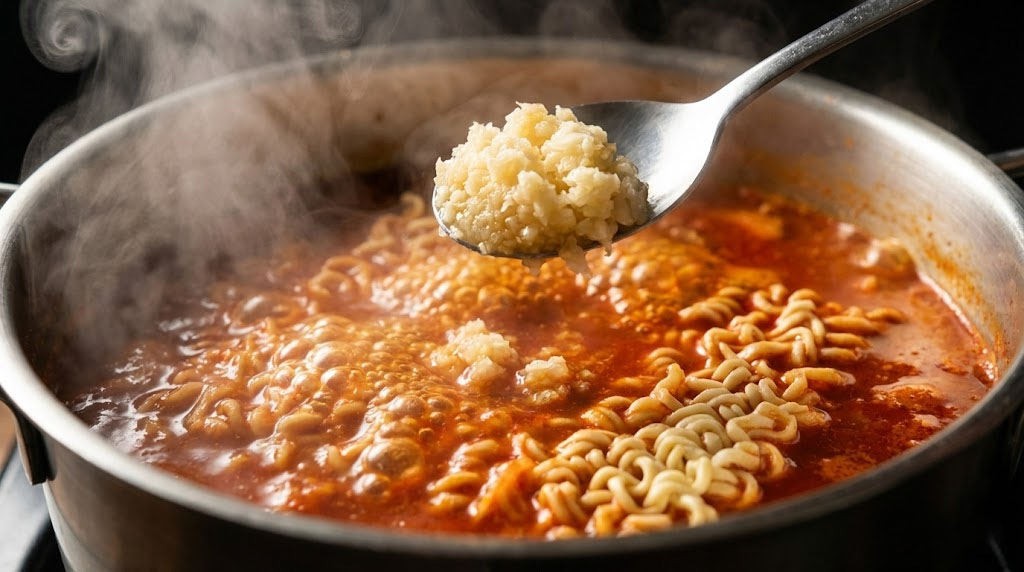
The most transformative of all shin ramyun hacks involves a staple of Korean cuisine: minced garlic. If you only try one upgrade today, make it this one.
Instant ramen broth is naturally heavy on sodium and spice, but it lacks true savory depth. Fresh garlic adds a sharp, aromatic richness that tricks your palate into thinking the soup has been slow-cooked for hours.
How to do it properly:
- Add ½ tablespoon of fresh minced garlic into the pot when the water reaches a rolling boil.
- Add the red soup powder immediately after the garlic.
- Let the garlic and seasoning boil together for 1 to 2 minutes before adding the noodles. This infuses the water and removes the raw, biting taste of the garlic.
🧠 Hack #2: Green Onions Are Not Optional
In authentic Korean cooking, a bowl of ramen served without green onions feels unfinished and lazy. You do not need a lot—just one fresh stalk, roughly chopped, will change the entire dish.
How Koreans utilize the green onion:
- The White Part: Toss the thicker, white bottom parts into the boiling broth at the same time as the noodles. This builds a sweet, vegetable base flavor.
- The Green Part: Sprinkle the leafy green tops over the noodles at the very last second before eating. This cuts through the greasy aftertaste of the fried noodles and makes the spicy soup feel incredibly fresh.
🧠 Hack #3: The “Don’t Stir” Egg Technique
Adding an egg is a classic move, but most beginners crack a raw egg into the boiling pot and immediately stir it aggressively. That is a massive culinary mistake.
Stirring the egg clouds the beautiful red broth, dulls the signature spicy kick of Shin Ramyun, and makes the soup look muddy. Instead, you should try the authentic Korean poached style.
The proper egg method:
- Crack the egg gently into the side of the pot exactly 1 minute before the noodles are fully cooked.
- Do not stir. Leave it completely alone.
- Turn off the heat and let the residual temperature set the egg white naturally.
When you sit down to eat, gently break the soft yolk over your noodles. It adds a luxurious, creamy richness without ruining the spicy integrity of the broth itself.

💡 What to Eat with Shin Ramyun?
If you are eating a hot bowl of ramen, you are absolutely required by Korean law (joking, but culturally true!) to eat Kimchi with it. The cold, crisp acidity of the fermented cabbage pairs perfectly with the hot, spicy noodles.
But what if the Kimchi sitting in your fridge is way too old and sour to eat raw? Do not throw it away! Highly fermented cabbage is basically culinary gold if you know how to use it.
👉 Check out our cultural guide on [Kimchi Fried Rice Hacks: How to Balance Overly Sour Kimchi] to save your leftovers!
Conclusion: Cook Like a Local
Next time you open a familiar red pack of Shin Ramyun, resist the urge to just mindlessly boil it. Small changes create a massive upgrade. By adding a spoonful of garlic, utilizing the different parts of a green onion, and poaching your egg carefully, you are honoring the way the dish was meant to be enjoyed. Your instant ramen will never taste the same again.
🔜 Next Post Teaser
So, your ramen game is now at a professional level. But have you ever noticed that your noodles get cold and mushy before you can even finish the bowl?
In Korea, there is a specific, iconic type of cooking pot used almost exclusively for ramen. It looks cheap, it dents easily, and it gets dangerously hot—but it is the secret to eating piping hot noodles down to the very last bite.
Next: [Why Your Ramen Gets Cold Fast (And the “Magic Bowl” Koreans Use)]