There is nothing sadder than taking your time to enjoy a hot meal, only to end up with lukewarm soup. This is exactly why your ramen gets cold fast if you eat it in a regular ceramic or plastic bowl.
If you have ever eaten at an authentic traditional restaurant in South Korea, you may have noticed a fascinating culinary phenomenon. Hearty stews (Jjigae) and soups arrive at the table vigorously boiling and sizzling—and remarkably, they stay physically hot until the very last spoonful.
The secret is not magic. It is the vessel itself. It is called a Ddukbaegi (뚝배기)—a traditional Korean earthenware pot. If you love cooking Korean food at home, understanding the science behind this single tool can completely change how your food tastes and feels.
Thermodynamics: The Science of the Ddukbaegi
Understanding why your ramen gets cold fast comes down to basic thermodynamics. Regular modern ceramic, glass, or plastic bowls lose heat almost instantly to the surrounding air. Once the boiling soup is poured in, the heat rapidly escapes through the thin walls. This is why your instant noodles often taste flat, starchy, and unappetizing halfway through the meal.
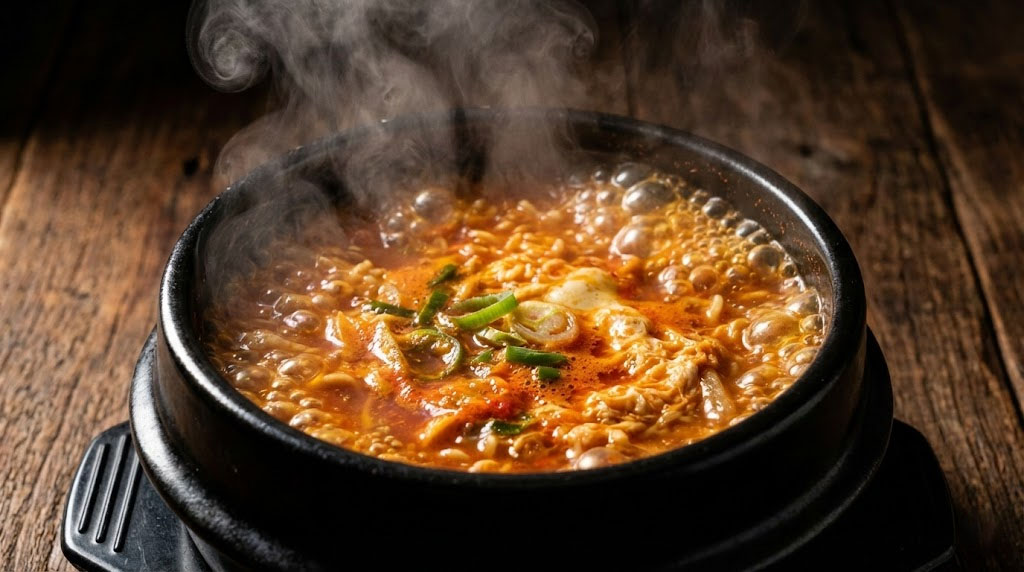
A Ddukbaegi, however, is crafted from thick, natural clay that acts like a thermal battery. Here is what that means for your dining experience:
- The Sizzle: The thick clay absorbs immense heat on the stove. Your soup keeps actively bubbling for several minutes even after it is removed from the fire and placed on the dining table.
- Flavor Extraction: The constant, sustained heat deepens the broth as you eat, slowly extracting more umami from the ingredients.
- Perfect Texture: If you eat at a normal pace, the noodles stay piping hot without turning into mush.
⚠️ WARNING: Never Use Soap on a Traditional Ddukbaegi
Before you attempt to use traditional Korean earthenware in your own kitchen, you must know the golden rule of Korean domestic culture.
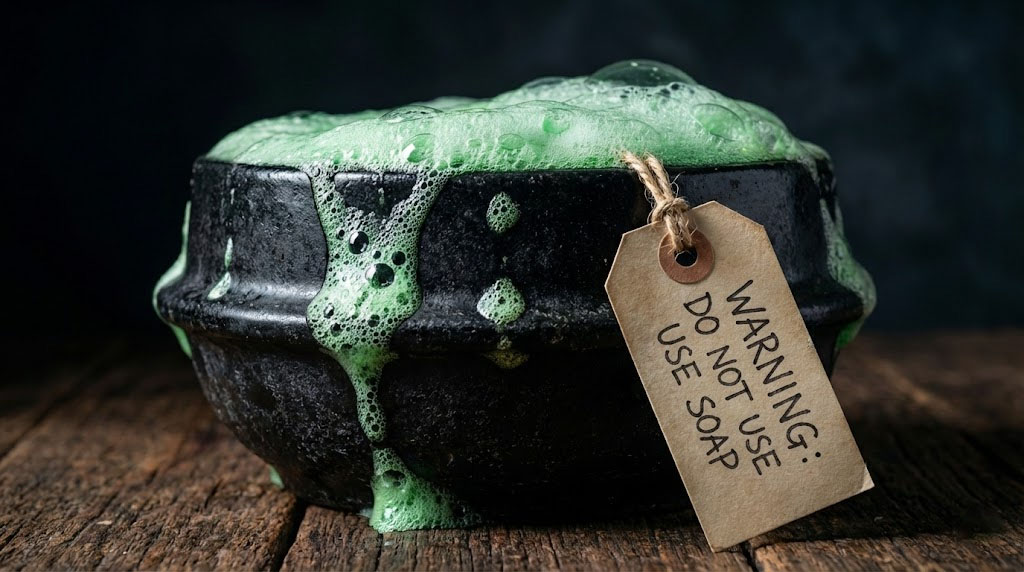
Never, ever wash a traditional unglazed clay Ddukbaegi with chemical dish soap.
Why? Traditional Korean earthenware (Onggi 옹기) is famously known as “breathing clay.” The material contains millions of microscopic pores. If you wash it like a normal plate, the liquid dish soap gets absorbed deep into the clay like a sponge. Later, when you put the pot back on the stove to boil water or soup, those trapped soap chemicals will bubble back out directly into your food. This is the number one mistake non-Koreans make when trying to adopt this kitchen tool.
🧯 Help! I Used Soap by Mistake – Is It Ruined?
Do not panic. While it is highly discouraged, you might still be able to save your pot if it only happened once. Try this traditional recovery method:
- Fill the contaminated pot with clean water.
- Boil it vigorously for 10 minutes, then discard the water.
- Repeat this process 2 to 3 times until absolutely no soap bubbles appear on the surface.
(Note: While this helps extract the soap, it is not always 100% guaranteed. Prevention is always the best solution in Korean kitchens.)
🧼 How Koreans Clean Earthenware Properly
Daily maintenance of a Ddukbaegi is actually surprisingly simple and completely natural:
- Hot Water Scrub: Use only plain hot water and a stiff natural brush immediately after eating before the food dries.
- Natural Abrasives: If the pot is very greasy from a pork stew, use a paste of baking soda or regular wheat flour to absorb the oils.
- The Rice Water Boil: Occasionally, Korean cooks will boil the water left over from washing raw white rice inside the pot. The natural starches from the rice water fill the tiny pores, strengthening the clay and prolonging the life of the bowl. (Think of it as similar to seasoning a cast-iron skillet).
The Evolution of Earthenware: Traditional vs. Modern Glazed
If you are tired of wondering why your ramen gets cold fast, the Ddukbaegi is the ultimate cultural solution. Today, there are generally two variations used in modern homes:
1. Traditional Clay (Onggi)
This is the most authentic, unglazed version. It literally breathes, which slightly improves the flavor of fermented stews over time. However, it requires strict “no soap” maintenance and is more fragile. It is favored by hardcore culinary traditionalists.
2. Modern Ceramic-Coated (Glazed)
To adapt to fast-paced modern life, many Korean manufacturers now produce earthenware that is glazed or ceramic-coated on the inside. This seals the microscopic pores, meaning they are completely safe to wash with regular dish soap while still retaining excellent heat compared to a regular bowl. This has become the standard for everyday convenience in modern Seoul apartments.
Conclusion
Once you experience the intense, sustained heat of a Ddukbaegi, you will never want to eat lukewarm soup out of a plastic bowl again. Start your journey by utilizing it for the ultimate comfort food—authentically upgraded instant ramen.
🔜 Next Post Teaser
Now that you have the perfect “Magic Bowl” to keep your food boiling hot, how are you going to chop the ingredients for your stew?
If you are looking for a heavy wooden cutting board and a chef’s knife, you are doing it the hard way. Discover the ultimate tool that Korean cooks use to chop vegetables and meat directly into the boiling pot—in seconds.
Next: [Why Koreans Don’t Use Cutting Boards (The “Scissor Hack” You Need)]
🔙 Previous Post
← Previous Post [Instant Ramen Hack: How to Make Shin Ramyun Taste Like a Restaurant Dish]