Have you ever walked past a traditional Korean restaurant and instantly felt hungry? That deep, nutty, deeply savory aroma that heavily fills the air is unmistakable. It is not just the smell of grilled meat or garlic.
It is the distinct scent of authentic Korean sesame oil (참기름).
However, when non-Koreans try to replicate this flavor at home, they often make a critical culinary mistake: they treat it exactly like olive oil or vegetable oil. They pour it into a hot pan and fry their ingredients in it. Doing this completely destroys the delicate flavor profile.
Here is the scientific and cultural secret to using this ingredient correctly, and the legendary “3-Second Rule” that changes everything.
Why Korean Sesame Oil Is Fundamentally Different
To understand how to use it, you must understand how it is made. Traditional Korean sesame oil is extracted from sesame seeds that have been deeply and intensively toasted before pressing.
Because of this specific roasting process, the authentic oil features:
- A very dark, rich amber color.
- An incredibly strong, concentrated roasted aroma.
- A bold, nutty finish that lingers on the palate.
But that intense roasting process also creates a crucial chemical limitation: it has an extremely low smoke point. If you heat this oil in a pan for too long, the delicate compounds burn rapidly, turning the beautiful nutty flavor into a harsh, bitter taste.
According to Wikipedia, sesame oil in East Asian cuisines is historically utilized as a flavor enhancer and finishing oil, rather than a cooking or frying medium. You do not cook with it. You finish with it.
The “3-Second Rule” (The Ultimate Culinary Hack)
Here is the exact method local Korean cooks use to preserve that mouth-watering restaurant aroma at home:
- Cook your dish completely using a neutral high-heat oil.
- Turn off the stove heat entirely.
- Plate the hot food in a serving bowl.
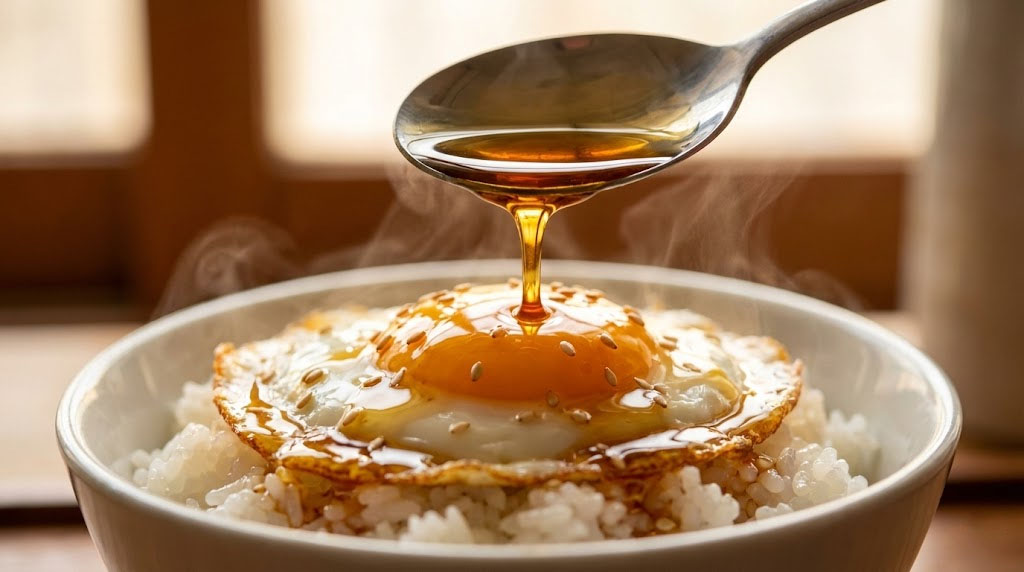
- Drizzle a small amount of Korean sesame oil over the food.
- Serve the dish to the table within 3 seconds.
Not 30 seconds. Not during the frying process. Exactly three seconds before eating.
That incredible smell you associate with a bustling Seoul diner? That is simply the result of fresh, unheated sesame oil vapor naturally reacting to the residual warmth of the plated food. By applying it at the very last second, you are preserving the volatile aromatic compounds instead of destroying them with stove heat.
Where This Finishing Oil Works Best
If you want to test the magic of the 3-second rule, try it on these classic traditional dishes:
1️⃣ Authentic Bibimbap
Bibimbap without a final drizzle of oil tastes flat and disjointed. Gochujang adds the spice, and vegetables add the crunch, but the oil acts as the culinary glue that binds every ingredient together. 👉 (Need a quick meal? Read our full guide here: [The Magic Red Sauce That Saves Your Leftover Veggies ])
2️⃣ Upgraded Kimchi Fried Rice
Always fry your rice and kimchi using a standard neutral cooking oil (like canola or sunflower). But right after you turn off the heat, stir in a teaspoon of Korean sesame oil. It instantly softens the sharp sourness of aged kimchi and adds massive depth. 👉 (Having trouble with sour kimchi? See the hack here: [Kimchi Fried Rice Hacks: How to Balance Overly Sour Kimchi ])
3️⃣ The Ultimate Comfort Food: Hot Rice and Egg
This is the simplest, most nostalgic test of quality. Take a bowl of steaming hot white rice, place a sunny-side-up fried egg on top, add a splash of soy sauce, and finish with a few golden drops of the oil. The aroma doubles instantly, creating a rich, deeply satisfying meal out of the most basic ingredients.
The Anatomy of Authentic Toasted Oil
When exploring an Asian supermarket, you will encounter dozens of different bottles. To achieve the authentic Korean flavor, you must know what to look for visually.
Avoid pale, yellow “light sesame oils,” cheap blended oils mixed with soybean oil, or cold-pressed neutral oils. These will not give you the restaurant aroma. Instead, look for bottles that boast a dark amber, almost coffee-like color. The label must explicitly state that the seeds were deeply “Toasted” or “Roasted,” and the ingredient list should contain exactly one item: 100% sesame seeds.
Conclusion
Korean food smells incredible because it rigidly follows one simple, scientific rule: Heat off. Oil on. Once you understand the volatile nature of this ingredient and start treating it as a delicate perfume for your food rather than a cooking fat, you will never fry with it again. One tiny drizzle. Three seconds. A massive difference.
🔜 Next Post Teaser
Now that you know the secret finishing oil that binds rice and meat together, let’s talk about another fundamental pillar of the Korean dining table.
How do locals eat those massive mountains of green leaves served with their sizzling BBQ? Korean food is not just about extreme flavors; it is a highly structured practice of nutritional balance and communal eating.
Get ready to learn the etiquette, the architecture, and the art of the perfect bite.
Next: [The Art of Ssam (쌈): How to Eat Korean BBQ the Right Way]
🔙 Previous Post
← Previous Post [The “Magic Red Sauce”: How Gochujang Bibimbap Saves Leftovers ]