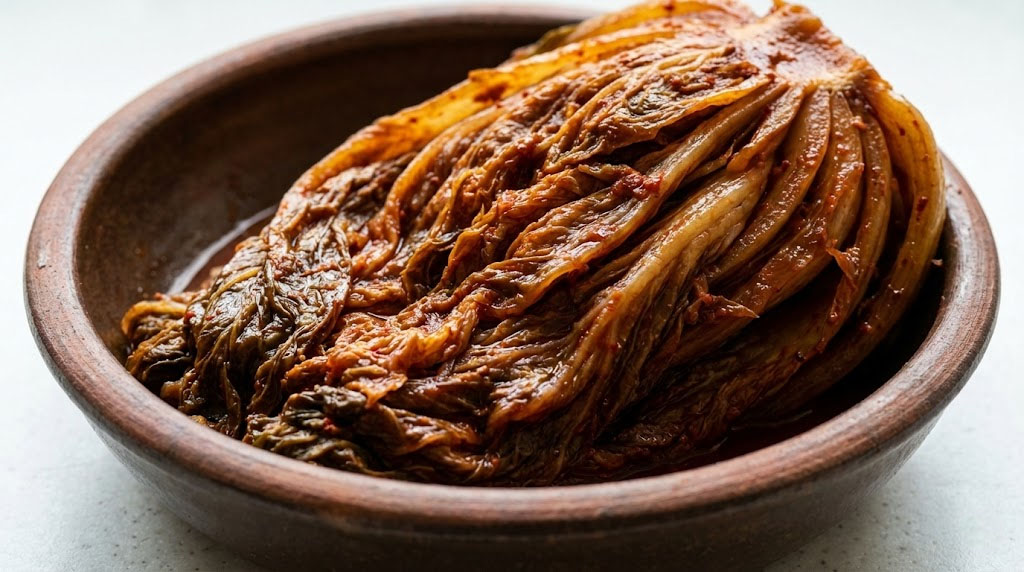
If your homemade Kimchi Fried Rice (김치볶음밥) tastes overwhelmingly sour, do not throw it away. You are not doing it wrong. In fact, encountering overly fermented cabbage is one of the most common challenges beginners face when cooking traditional Korean food at home.
The good news? Sour kimchi does not mean failed kimchi. In Korean culinary culture, highly fermented, aged kimchi (Mugeunji 묵은지) is actually the absolute best ingredient for cooking. It just means you need to apply a few practical adjustments.
Learning proper kimchi fried rice hacks is a rite of passage for anyone exploring Korean cuisine. Here is the cultural and scientific breakdown of how to rescue your dish.
The Science of Old Kimchi
Before applying any kimchi fried rice hacks, it helps to understand why it gets sour. Kimchi ferments through Lactobacillus, a healthy probiotic bacteria that creates lactic acid over time. When eaten raw, aged kimchi can make your lips pucker. But when subjected to high heat, that sharp acidity transforms into a deep, complex umami flavor.
Here is how Korean households naturally balance that sharp acidity without ruining the dish.
🧠 Hack #1: The Maillard Reaction (Avoid Sugar)
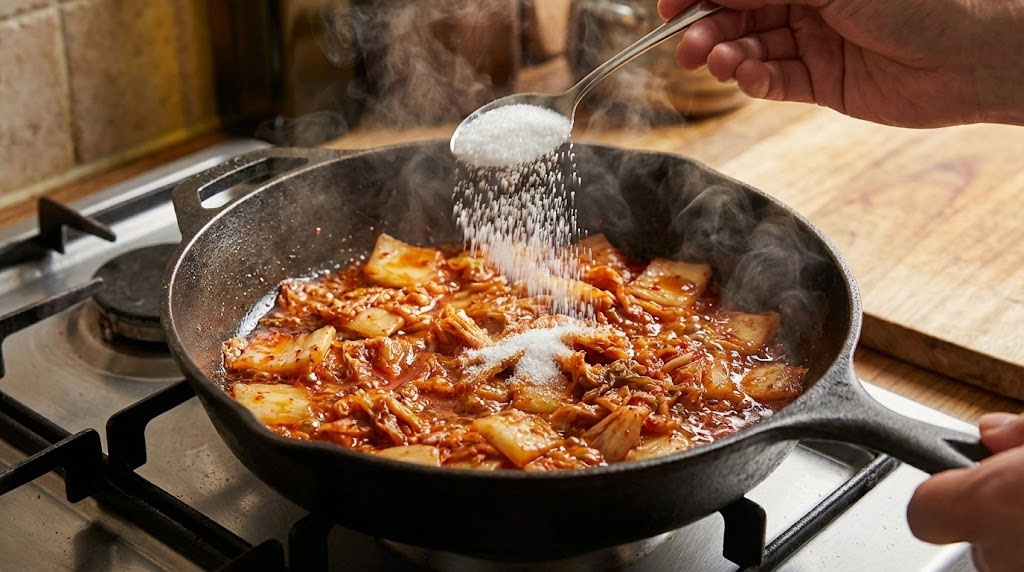
When beginners taste sour kimchi in the pan, their first instinct is to dump sugar into it. This is the biggest mistake you can make, as it results in a sticky, unnaturally sweet dish.
Instead, the solution is heat and fat. Add a generous amount of neutral cooking oil or roasted sesame oil to your pan first, and stir-fry the chopped sour kimchi much longer than you normally would (at least 3 to 5 minutes before adding rice). The extended heat breaks down the lactic acid and caramelizes the edges of the cabbage, naturally bringing out its hidden savory notes.
🧠 Hack #2: The Dairy Shield (Butter or Cheese)
Adding dairy to a traditional Korean dish may sound completely untraditional to outsiders, but it is actually one of the most common and authentic modern kimchi fried rice hacks used in Seoul today.
If the kimchi is extremely old, melt a small pat of unsalted butter into the pan while frying the cabbage. Alternatively, mix in a handful of shredded mozzarella cheese at the very end. The milk fats in the butter and cheese coat the tongue, acting as a physical shield that instantly neutralizes the sharp acidic bite, creating a rich and creamy flavor profile.
🧠 Hack #3: Egg Timing Matters
An egg can easily save sour kimchi fried rice, but the timing of when you add it changes everything.
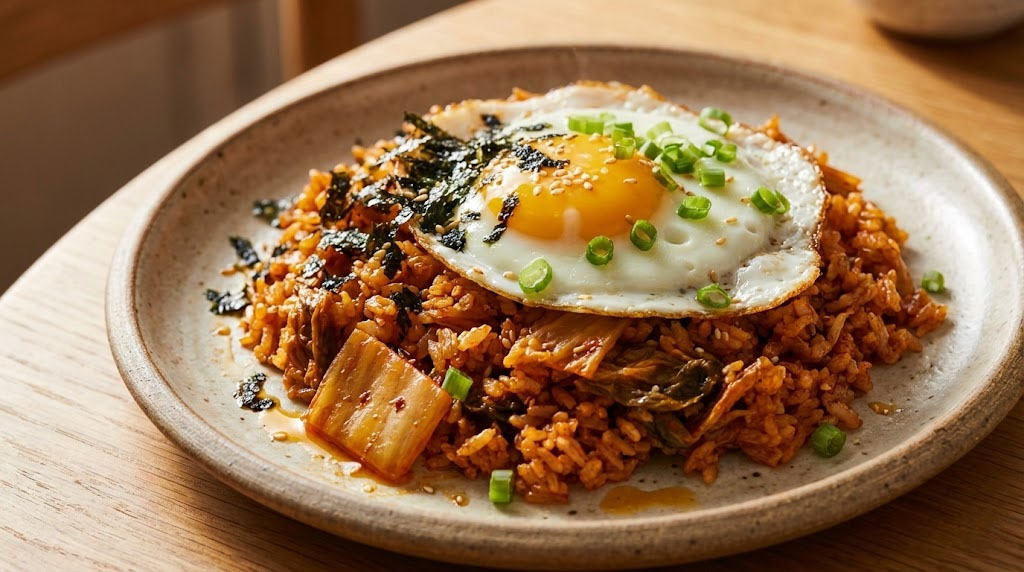
Do not crack a raw egg directly into the sour rice mixture, as it will make the dish soggy and wash out the flavors. Instead, fry the egg perfectly in a separate pan (sunny-side up with crispy edges is the Korean standard) and place it on top at the very end. The rich, runny yolk mixes with the sour rice on the spoon, softening the sharp flavors perfectly without killing the chewy texture of the rice.
🧠 Hack #4: Moisture Control (Day-Old Rice)
Freshly cooked, steaming hot rice makes everything worse. Hot rice contains too much moisture. When mixed with the wet juice of sour kimchi, your fried rice will turn into a mushy porridge.
Always use day-old, cold rice straight from the refrigerator. Cold rice grains are firm and separate easily, allowing them to absorb the seasoned oils and kimchi juices perfectly without losing their structure.
Conclusion: Zero Waste Korean Cooking
In Korean food culture, nothing goes to waste. A fresh head of cabbage is eaten raw as a crisp side dish, and months later, when it becomes incredibly sour, it is transformed into stews and fried rice.
Ultimately, sour kimchi is never a culinary problem. By mastering these simple kimchi fried rice hacks, you are not just saving a meal—you are cooking with the exact same practical wisdom used in authentic Korean kitchens for generations.
🔜 Next Post Teaser
Now that you have mastered the ultimate fried rice, it is time to tackle another Korean comfort food staple.
Have you ever tried making the famous Shin Ramyun at home, but it just doesn’t taste as rich and deep as the ones served in local Korean diners (Bunsikjip 분식집)? There is a secret to upgrading that red instant noodle packet into a restaurant-quality meal.
Next: [Instant Ramen Hack: How to Make Shin Ramyun Taste Like a Restaurant Dish]