Open your refrigerator right now. Do you see half of an unused onion? A wrinkly carrot? Some spinach that is about to give up on life?
Do not throw them away. In traditional Korean cooking, there is a brilliant cultural system designed to turn those sad, forgotten leftovers into a satisfying, restaurant-quality meal in under 10 minutes. The dish is universally known as Bibimbap, but the real secret to its success is not the vegetables themselves. It is the magic red sauce that binds everything together.
Here is how local Korean households utilize the incredible flavor profile of fermented chili paste to create a perfect bowl of gochujang bibimbap (고추장 비빔밥), effectively eliminating food waste.
What Is Gochujang? (The Fermented Flavor Bomb)
Gochujang (고추장) is a highly concentrated, fermented Korean chili paste that has been traditionally used in everyday cooking for centuries.
However, it is a huge mistake to think of it as just another “spicy” condiment like hot sauce or Sriracha. Because of the lengthy natural fermentation process involving glutinous rice and fermented soybeans, Gochujang is incredibly complex. It is simultaneously spicy, slightly sweet, and deeply savory.
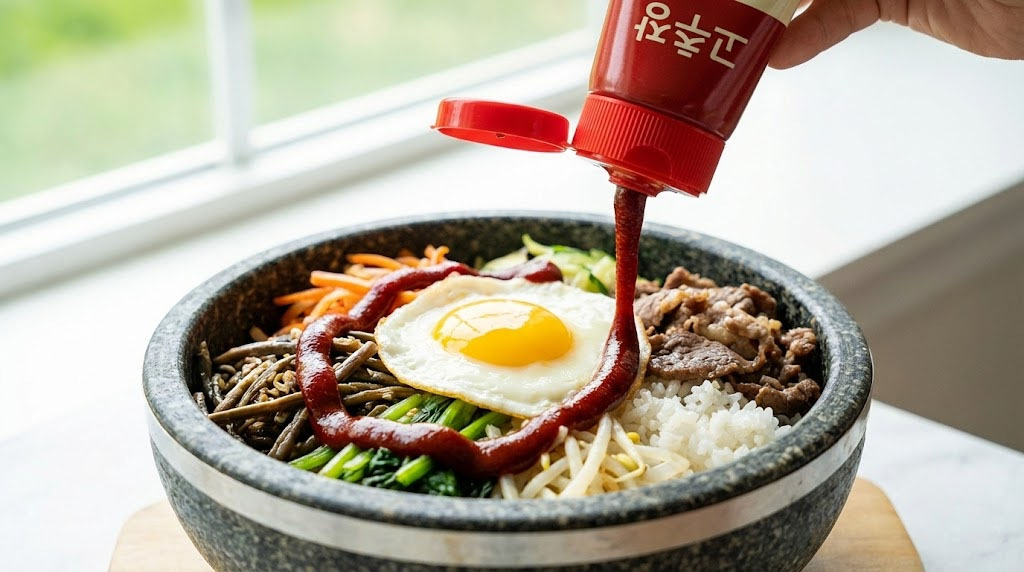
That complex flavor profile is exactly why just one spoonful can seamlessly transform plain white rice and random leftover vegetables into a complete, cohesive dish that feels entirely intentional rather than improvised.
The “Fridge Clean-Out” Culinary System
Making gochujang bibimbap at home is not a strict recipe; it is a highly efficient household system. Here is how Koreans actually utilize this magic paste on a busy weeknight:
- Lightly sauté whatever vegetables you have slowly wilting in your fridge (zucchini, mushrooms, carrots, spinach—absolutely anything works).
- Add a portion of warm, steamed rice to a large mixing bowl.
- Top the rice with the sautéed vegetables and a perfectly fried egg.
- Squeeze a generous dollop of Gochujang right on top.
- Vigorously mix everything together until the rice turns a beautiful, appetizing red.
You just saved food from the trash, created a nutritionally balanced meal, and finished cooking in under 10 minutes.
The Evolution of Packaging: From Tubs to Tubes
If you visit a traditional Asian grocery market, you will notice Gochujang is primarily sold in large, square red plastic tubs, reflecting the traditional large family structure of the past.
However, modern South Korean food culture has evolved. With the rapid rise of single-person households in Seoul, food manufacturers revolutionized the packaging by introducing tube-style Gochujang.
This packaging mimics a toothpaste or ketchup tube. It offers unparalleled convenience (no spoon required, preventing cross-contamination) and limits air exposure to keep the fermented paste fresher for much longer. It has become such a staple that many Koreans actually travel abroad with a tube of Gochujang in their suitcase to mix with foreign food when they miss the taste of home.
🔥 Want to Level Up? The Dolsot Upgrade
While a warm bowl of gochujang bibimbap is delicious on its own, restaurants often serve a premium version called Dolsot Bibimbap (Stone Pot Bibimbap 돌솥비빔밥).
If you want that incredible, crispy golden rice crust (nurungji 누룽지) on the bottom, there is one upgrade that changes everything: using a heated stone bowl. If you preheat the bowl before adding the rice, the bottom slowly crisps and sizzles while you mix and eat. That crunchy texture is exactly what upscale restaurants charge extra for.
👉 (Curious about how these traditional bowls work? Check out our scientific breakdown: [Why Your Ramen Gets Cold Fast (And the Magic Bowl Koreans Use)])
Conclusion: The Efficiency of Korean Cooking
Gochujang is not just a hot sauce. It is a fundamental culinary shortcut to instant flavor, nutritional balance, and reducing household food waste. This is exactly why Korean home cooking feels so efficient and practical. You are not rigidly following recipes; you are using powerful cultural tools that perfectly adapt to what you already have in your kitchen.
🔜 Next Post Teaser
Now you have a fridge completely cleared of leftover vegetables, a warm bowl of rice, and the magic red sauce. But there is one final, crucial detail that makes Korean food smell absolutely irresistible from a mile away.
It is a single, golden drop of liquid added at the very end of the cooking process. Without it, your Bibimbap is simply incomplete.
Next: [Korean Sesame Oil Hack: The 3-Second Rule That Makes Korean Food Smell Amazing]
🔙 Previous Post
← Previous Post [Why Koreans Don’t Use Cutting Boards (The “Scissor Hack” You Need)]