If you have ever visited an authentic Korean barbecue restaurant, you have probably seen it: a giant basket overflowing with vibrant, fresh green leaves arriving at your table alongside the raw meat.
Most first-time international diners make the exact same culinary mistake. They ask for a knife, chop the leaves up, pour a dressing over them, and attempt to eat them like a Western side salad. 🛑 Stop right there.
That basket is not a salad. It is a set of edible wrappers. If you are wondering how to eat Korean BBQ ssam correctly, you need to forget everything you know about traditional side dishes. In Korean dining culture, we do not just eat pieces of meat on their own. We meticulously build one perfect, balanced bite. That bite has a specific name: Ssam (쌈).
What Is Ssam? (The Cultural Philosophy)
Ssam (쌈) literally translates to “wrapped.” The concept is simple but nutritionally and culturally powerful. Historically, wrapping food in leaves (Bossam 보쌈) was believed to symbolize wrapping and eating good luck and fortune.
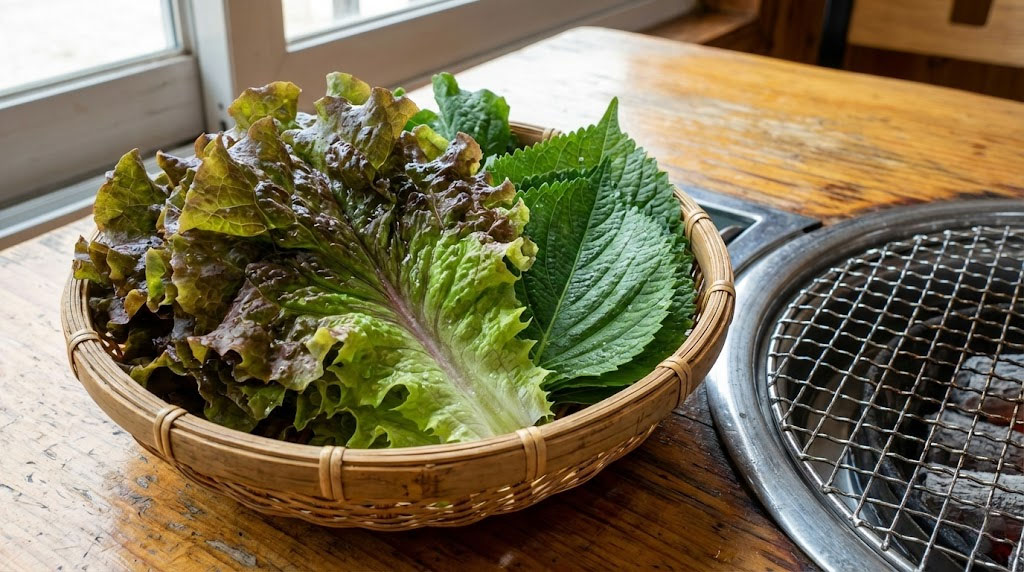
From a culinary perspective, grilled meat is rich, fatty, and heavy on the stomach. Fresh vegetables, on the other hand, are cold, crisp, and refreshing. When you wrap sizzling meat, warm rice, and fermented sauce inside a fresh leaf and consume it in one mouthful, everything balances out perfectly. That is exactly why you can eat seemingly endless amounts of pork belly (Samgyeopsal 삼겹살) at a BBQ without feeling overwhelmed. The vegetables do the hard digestive work for you.
The “Holy Trinity” of Wrap Ingredients
Understanding the core components of that green basket is the first step in learning how to eat Korean BBQ ssam. These three items appear at almost every dining table in the country:
- Sangchu (상추) — Red or Green Leaf Lettuce: This is your primary foundation. Sangchu is soft, mildly flavored, and wide enough to hold multiple ingredients securely. Think of it as the edible plate you will build your meal upon.
- Kkaennip (깻잎) — Perilla Leaves: This is the absolute game changer. Visually, it resembles a jagged basil leaf, but the flavor profile is completely unique—somewhere between mint, basil, and a hint of anise. Its incredibly strong herbal aroma cuts straight through heavy, greasy meat.
- Ssamjang (쌈장) — The Wrap Sauce: This is not ketchup, and it is certainly not steak sauce. Ssamjang is a thick, complex Korean paste made from a base of spicy Gochujang, savory Doenjang (soybean paste), minced garlic, and sesame oil. It is designed specifically to bind wraps together.
The Architecture: Building the Perfect Bite
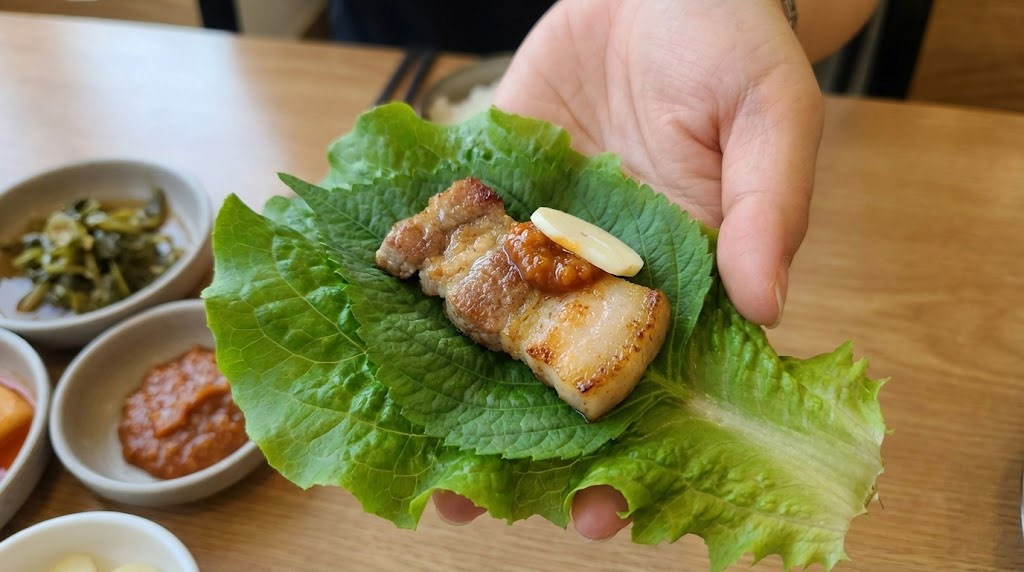
When mastering how to eat Korean BBQ ssam, the architecture of the wrap is crucial. There is a specific order to building it efficiently. Follow this traditional structure:
- The Base: Hold a large, dry piece of Sangchu (lettuce) flat in your non-dominant hand.
- The Aromatic Layer: Place one Kkaennip (perilla leaf) directly on top of the lettuce. (Double layers equal better texture and a burst of aroma).
- The Protein: Add a piece of sizzling grilled pork or beef. 👉 (Is the meat too big? Authentic restaurants cut it directly on the grill using specialized kitchen shears. Read our cultural breakdown here: [Why Koreans Don’t Use Cutting Boards (The “Scissor Hack” You Need)])
- The Glaze: Lightly dip the hot meat in a tiny bit of sesame oil before placing it in the leaf. 👉 (Warning: This only tastes incredible if you use authentic toasted oil correctly. Learn why here: [Korean Sesame Oil Hack: The 3-Second Rule])
- The Sauce: Add a small dab of Ssamjang to the meat. Do not overdo it; it is very salty.
- The Kick: Finish the stack with a slice of grilled garlic, a slice of raw jalapeño, or a small bite of fermented kimchi.
The Golden Rule: One Bite Only
This final part of Korean dining etiquette is absolutely non-negotiable. You must eat the entire ssam in one single bite.
Do not attempt to bite it in half. If you do, the structural integrity fails: the fermented sauce spills, the leaves fall apart, and the carefully crafted balance of flavors is completely ruined. If the wrap feels too big for your mouth, simply reduce the amount of rice or meat next time. But always keep it strictly: one wrap, one bite.
Conclusion: The Science of Contrast
Ultimately, learning how to eat Korean BBQ ssam is an exercise in culinary contrast. You are combining cold vegetables with hot meat, crisp leaves with chewy pork, and fresh herbal notes with deeply savory fat. This constant, rolling contrast keeps your palate continually refreshed, ensuring that your last bite tastes just as exciting and delicious as your very first.
🔜 Next Post Teaser
Now you have successfully built the perfect ssam. It is rich, spicy, fresh, and deeply satisfying—and suddenly, you are incredibly thirsty.
Water is fine. A cold soda works. But on 99% of authentic Korean BBQ tables, a small, iconic green bottle inevitably appears to wash down the rich pork fat.
Next up: [The Ultimate Guide: How to Drink Korean Soju (5 Steps)]
🔙 Previous Post
← Previous Post [Korean Sesame Oil Hack: The 3-Second Rule That Makes Food Smell Amazing]