Have you ever followed a recipe perfectly, only to find your Korean food too sour? Do not worry. This is one of the most common problems beginners face when cooking traditional Korean dishes for the first time.
Korean cuisine relies heavily on fermentation—especially with staple ingredients like kimchi. While this creates a beautiful depth of flavor, it also naturally generates acidity. When fermentation goes a little too far, that sourness can easily overwhelm the entire dish.
But here is the good news: sourness does not mean failure. It simply means your dish needs a small, strategic adjustment. Below are 3 proven culinary hacks that Korean home cooks actually use when their food turns out a bit too tart.
🍲 Why Does Korean Food Taste Too Sour?
Before fixing the problem, you need to understand the science. Fermentation creates lactic acid, which gives aged kimchi and many Korean broths their signature tang.
As ingredients age, this lactic acid continues to build. Understanding this process helps you control the flavor instead of fighting it blindly. When you find your Korean food too sour, your goal is not to “erase” the acid, but to balance it.
🧠 Hack #1: Balance Sourness with Sugar (Carefully)
When faced with an overly acidic dish, the first instinct for many home cooks is to reach for the sugar (설탕). This works incredibly well, but only if you use a tiny amount.
Sugar does not physically remove the acidity; instead, it balances how your tongue perceives those sharp flavors.
How to do it properly:
- Add ½ teaspoon of sugar at a time.
- Stir well, let it melt, and taste before adding more.
- Stop immediately as soon as the sharp edge of the sourness softens.
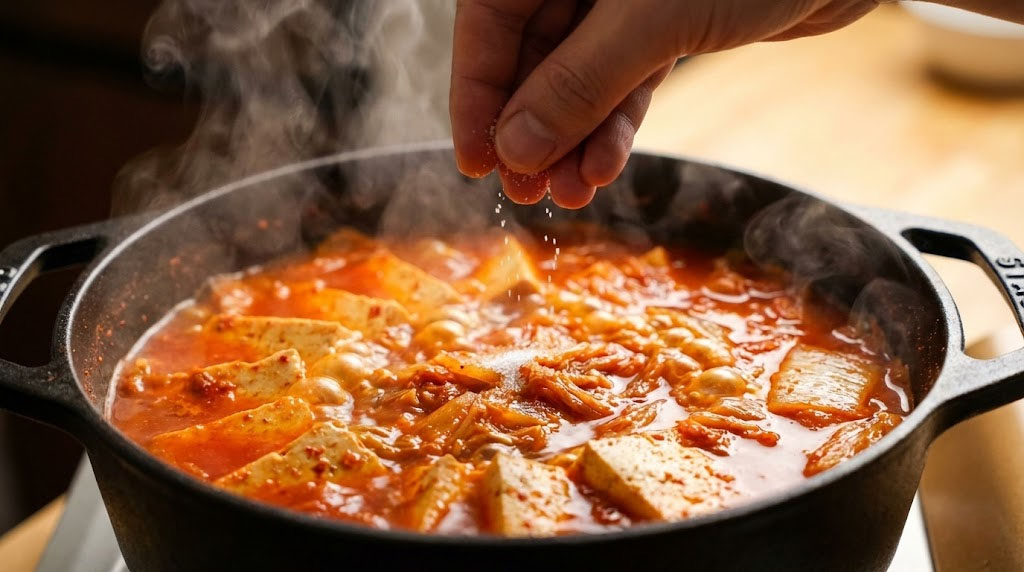
⚠️ Important: Sugar does not make the dish sweet—it rounds out the flavor. However, too much sugar is far worse than sourness, and once added, it cannot be undone. Always add slowly!
🧠 Hack #2: Use Oil to Coat the Acidity
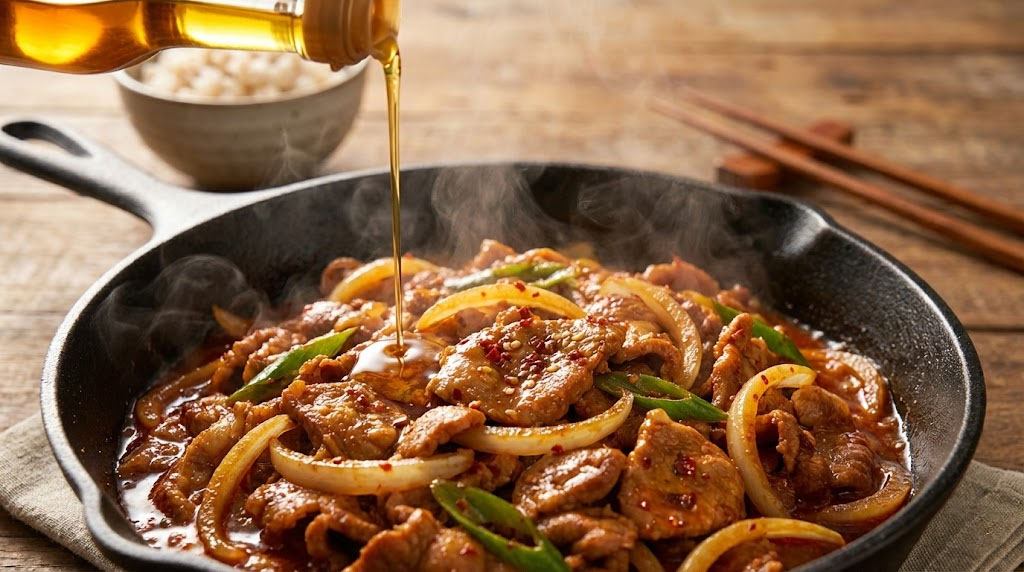
Fat is a brilliant culinary tool that reduces how strongly your tastebuds register sour flavors. If your Korean food is too sour, using the right oil acts as a gentle flavor softener rather than a heavy cover-up.
This method works especially well for stir-fries and cold side dishes where the acidity feels too sharp on the tongue.
Best options:
- Sesame oil: Adds a nutty, authentic aroma while balancing the dish.
- Neutral oil: Best when you want to soften the bite without changing the original flavor profile.
How to use it: Always add a light drizzle of oil at the very end of cooking, right after you turn off the heat. A small amount is enough to coat the palate and immediately soften the sharp acidity.
🧠 Hack #3: Boil It Longer (Especially for Stews)
If you are making Kimchi Jjigae (Kimchi Stew) or any Korean soup, the overwhelming sourness often comes from volatile acids trapped in the broth.
Fix it like this:
- Open the lid of your pot.
- Simmer on medium heat for an additional 10 minutes.
Letting the steam escape helps the excess acidity evaporate naturally into the air. This results in a much deeper, milder, and richer flavor—without needing to add a single extra ingredient.
💡 The Best Way to Use Sour Kimchi
If your kimchi has become far too sour to fix with a pinch of sugar, do not eat it raw. You need to cook it.
Many Koreans say: “Old kimchi (묵은지) is gold – if you know how to cook it.” Heat completely transforms sharp sourness into a deep, savory umami flavor. One of the absolute smartest ways to use over-fermented, sour kimchi is by turning it into a rich fried rice.
👉 Ready to turn that sour mistake into a masterpiece? Read our ultimate guide here: 🔗 Kimchi Fried Rice Hacks (If Your Kimchi Is Too Sour)
✅ Quick Summary: The Sour Food Fix
- Add sugar little by little to balance the sharp notes.
- Finish with a drizzle of oil to softly coat the acidity.
- Boil stews longer with the lid open to let volatile acids escape.
- Don’t throw away sour kimchi – apply heat and cook it!
(Pro Tip: If you cook Korean food often, using a thick-bottomed pan and high-quality roasted sesame oil makes a massive difference in controlling heat and flavor. Good tools make authentic cooking much easier!)
Ultimately, sour Korean food isn’t a mistake. It is just an opportunity to use smarter cooking hacks.