If you have ever watched a Korean drama or visited a Korean home, you may have noticed that Korean kitchen culture feels different from Western kitchens.
From stainless steel food containers to bright pink rubber gloves, Korean households rely on tools that prioritize durability, hygiene, and efficiency. These tools did not become popular by accident. They evolved from Korea’s food traditions, small living spaces, and a strong emphasis on shared meals.
Understanding Korean kitchen culture is not just about cooking recipes. It is about understanding the daily habits and practical systems that shape how Korean families prepare and store food.
Why Korean Kitchen Culture Developed Differently
Korean food includes fermented dishes such as kimchi, soybean paste, and various pickled vegetables. These foods have strong flavors, vivid colors, and long storage periods.
Because of this, Korean kitchens evolved around:
- Durable materials
- Easy cleaning systems
- Space-saving storage
- Tools designed for shared meals
Unlike many Western kitchens that rely heavily on plastic storage and large cutting boards, Korean kitchens often emphasize stainless steel, compact design, and multi-purpose tools.
1. Kitchen Shears Instead of Cutting Boards
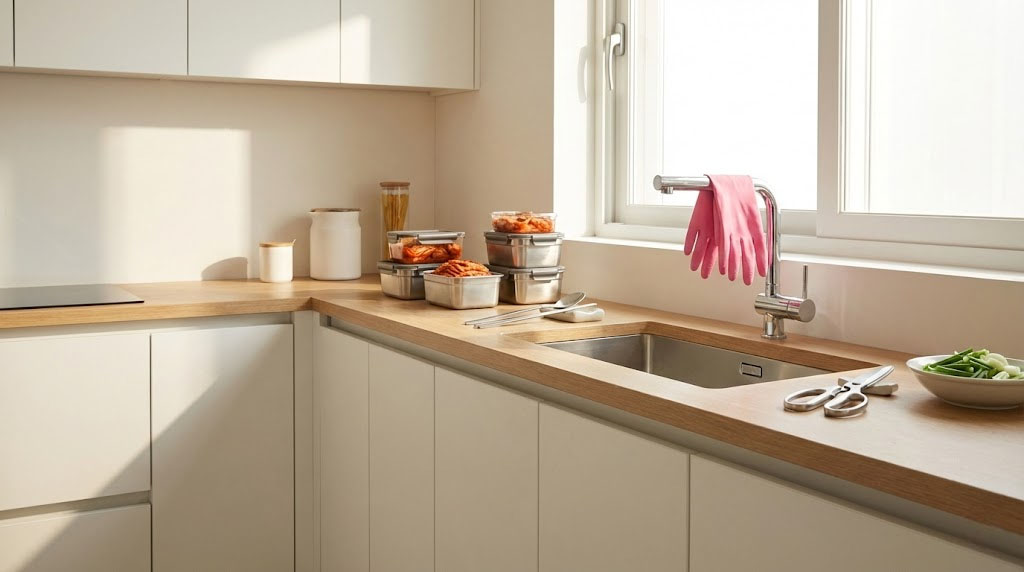
In many Western homes, a cutting board and chef’s knife are central tools. In Korean kitchen culture, high-quality kitchen shears are often used instead.
Green onions, kimchi, meat, and even noodles are frequently cut directly into a pan or bowl using scissors. This habit reduces preparation time and minimizes the number of dishes that need to be washed.
This practice is especially visible in Korean barbecue restaurants, where meat is commonly cut at the table.
You can explore this cultural habit further in our detailed guide on Korean kitchen shears.
2. Stainless Steel Food Containers for Banchan
A typical Korean refrigerator contains multiple small side dishes known as banchan (반찬). These include kimchi (김치), marinated vegetables, pickles, and seasoned greens.
Plastic containers can absorb odor and stain easily, especially when storing fermented foods. For this reason, many Korean households prefer airtight stainless steel containers.
Stainless steel is:
- Non-porous
- Resistant to staining
- Long-lasting
- Easy to sanitize
This preference reflects a broader emphasis on hygiene in Korean kitchen culture.
For a deeper look at how these containers are used, see our article on stainless steel food containers for kimchi.
3. Thick Rubber Gloves for Hot Water Washing
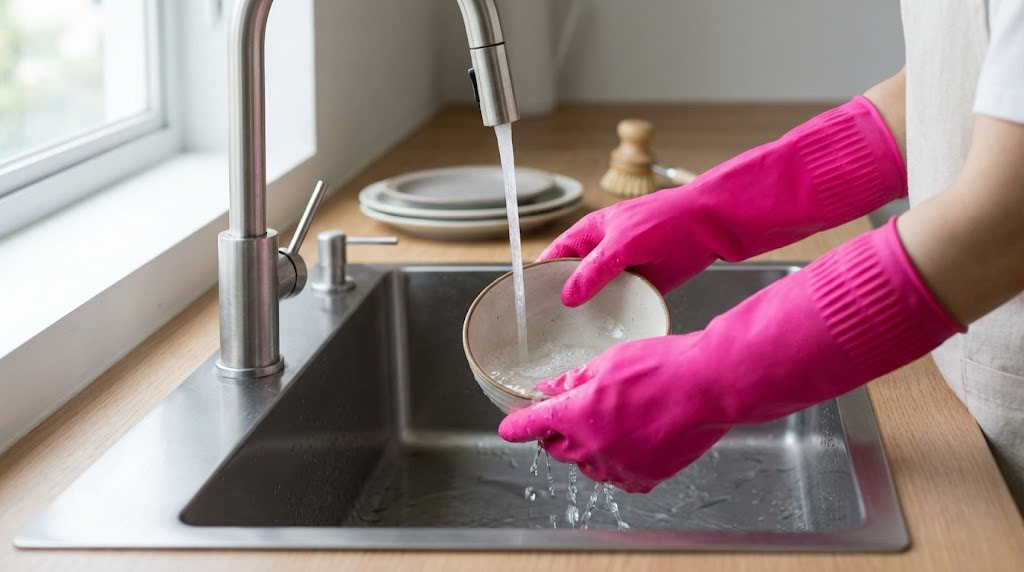
Bright pink rubber gloves are a familiar sight in Korean homes.
Many Korean households wash dishes using very hot water to remove oil and food residue. Thin disposable gloves are not suitable for this habit. Instead, thick, heat-resistant rubber gloves that extend up the forearm are commonly used. Over time, these gloves have become a recognizable part of Korean domestic culture.
Over time, these gloves have become a recognizable part of Korean domestic culture.
Our full guide on Korean rubber gloves explains why they are designed differently from standard dishwashing gloves.
4. Flat Stainless Steel Chopsticks
Another distinctive element of Korean dining is the use of flat stainless steel chopsticks.
While Japan commonly uses wooden chopsticks and China often uses bamboo, Korean chopsticks are metal and rectangular.
Historians note that metal utensils were historically associated with royal dining. Today, stainless steel chopsticks are valued for their durability and hygiene. Their flat shape also prevents them from rolling on traditional small dining tables known as soban.
We explore this topic further in our article about Korean metal chopsticks.
How These Tools Reflect Korean Dining Habits
Korean meals are typically shared. Dishes are placed in the center of the table, and each person takes small portions.
Because of this structure, tools must be:
- Easy to clean
- Durable for daily use
- Suitable for multiple dishes at once
Korean kitchen culture developed as a practical system built around everyday efficiency rather than luxury.
The Cultural Logic Behind the System
Many Korean homes are designed with limited kitchen space. This encourages:
- Compact storage
- Multi-purpose tools
- Stackable containers
- Minimal waste
Rather than constantly replacing disposable items, households often invest in tools designed to last for years. This approach aligns with Korea’s broader emphasis on practicality and long-term use.
Conclusion
Korean kitchen culture is not defined by a single tool or recipe. It is shaped by shared dining traditions, fermented foods, and practical living environments.
From stainless steel containers to flat metal chopsticks and heat-resistant gloves, each item reflects a cultural preference for hygiene, efficiency, and durability. Understanding these habits provides deeper insight into how Korean households function on a daily basis — beyond what is shown in restaurants or television.
How Korean Kitchen Culture Continues to Evolve
Modern Korean kitchen culture continues to adapt. While traditional tools remain common, many households now combine them with contemporary appliances and smart storage systems. However, the core principles of efficiency, hygiene, and durability remain unchanged.
FAQ
What makes Korean kitchen culture unique?
Korean kitchen culture emphasizes durability, hygiene, and shared dining habits shaped by fermented foods and compact living spaces.
Why do Korean households prefer stainless steel tools?
Stainless steel is long-lasting, easy to clean, and resistant to odor and staining, making it ideal for fermented dishes.