You have explored the complex world of fermented Kimchi(김치), mastered the interactive art of the Korean BBQ wrap, and even tasted the sweet, viral K-Pop dessert puff.
👉 (Missed the dessert guide? Check out the cultural phenomenon here: [Blackpink Jennie Favorite Snack: The Viral Banana Kick Hack])
Now, let’s talk about a highly specific culinary phenomenon that appears in almost every single K-Drama. The main characters are sitting on the bare floor, surrounded by half-unpacked cardboard boxes, enthusiastically eating thick black noodles from a plastic-wrapped delivery bowl.
It is not squid ink pasta, and it is certainly not chocolate. It is Jajangmyeon (짜장면). If you have ever wondered why Koreans eat Jajangmyeon on moving day, it is not just a random television trope; it is a deeply ingrained, almost mandatory cultural ritual. Here is the historical sociology behind this tradition, and the insider hacks to order and mix it like a true local.
1. What Exactly Is Jajangmyeon?
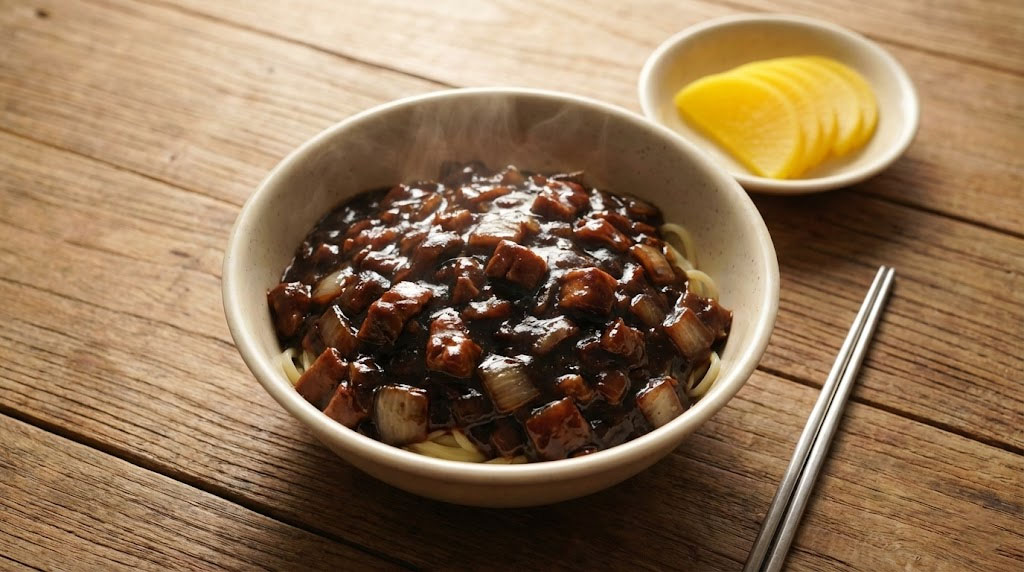
Before exploring the moving day culture, we must understand the dish itself. Jajangmyeon is a Korean-Chinese noodle dish topped with a thick, heavy sauce made from Chunjang (춘장)—a salty, fermented black soybean paste—stir-fried with diced pork and vegetables (predominantly onions and zucchini).
- The Taste Profile: It is deeply savory, slightly sweet, earthy, and incredibly rich.
- The Origin: The dish originated from early Chinese immigrants in Incheon’s Chinatown in the early 20th century, but it rapidly evolved to suit local palates, becoming an iconic South Korean soul food.
2. The Practicality: Why Koreans Eat Jajangmyeon on Moving Day
If you ask a local friend in Seoul, “What should we eat after carrying these boxes?”, 99% of them will instinctively say Jajangmyeon. Many foreigners ask why Koreans eat Jajangmyeon on moving day. Is it a superstition? Does the black color symbolize good luck?
The reality is not mystical at all; it is purely practical and sociological.
- Reason #1: The “Delivery King”: In the past, when a family moved into a new home, the kitchen appliances and cookware were packed away. Cooking was physically impossible. Jajangmyeon was historically the fastest and most reliable delivery food in the country (often arriving in heavy iron boxes within 10 to 15 minutes) and required zero utensils or plate setup.
- Reason #2: High Energy, High Efficiency: Moving furniture is exhausting, physical labor. Jajangmyeon is packed with dense carbohydrates from the thick noodles and rich pork fat from the sauce. It provides a massive, instant caloric energy boost, and it has historically been highly cost-effective for feeding large groups of helpers.
- Reason #3: The “Dust” Myth: There is a long-standing, humorous cultural belief that the heavy pork fat in the black bean sauce helps “slide the house dust down” your throat and safely out of your system after a long day of sweeping a new apartment. While scientifically unproven, it remains a beloved justification for indulging in the greasy meal!
3. The Perfect Palate Cleanser: Danmuji (단무지)
You will never, ever see this dish served alone. It is universally accompanied by bright yellow, crescent-moon-shaped slices of radish. This is Danmuji (단무지), a sweet and sour pickled yellow radish.
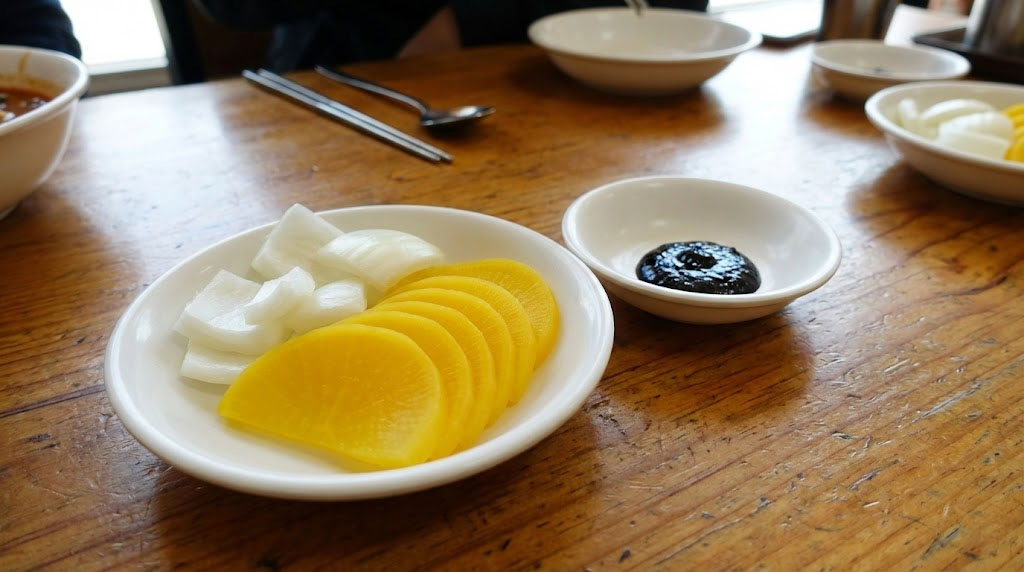
- The Eating Hack: Do not eat the heavy noodles straight through. Take a large bite of the rich, greasy noodles, chew, and then immediately bite into a cold, crunchy piece of Danmuji. The sharp acidity cleanses your palate perfectly, resetting your taste buds for the next bite.
4. Menu Decoder: Jajang vs. Ganjajang
When you finally visit a Korean-Chinese restaurant, the menu will confuse you. There are two distinct types of the same dish. Knowing the difference ensures you don’t look like a tourist:
- Normal Jajangmyeon: The sauce is pre-made in a massive pot with added water and a starch slurry. It is softer, more liquid, and served already poured over the noodles.
- Ganjajang (간짜장): The sauce is stir-fried entirely fresh in a wok the exact second you order it, with absolutely no water or starch added. It comes in a separate bowl. It features a smoky, intense “fire taste” (불맛) and the onions remain highly crisp.
Pro Tip: Always spend the extra dollar to order Ganjajang. It is the undisputed gourmet choice.
5. The “Two-Handed” Mixing Technique
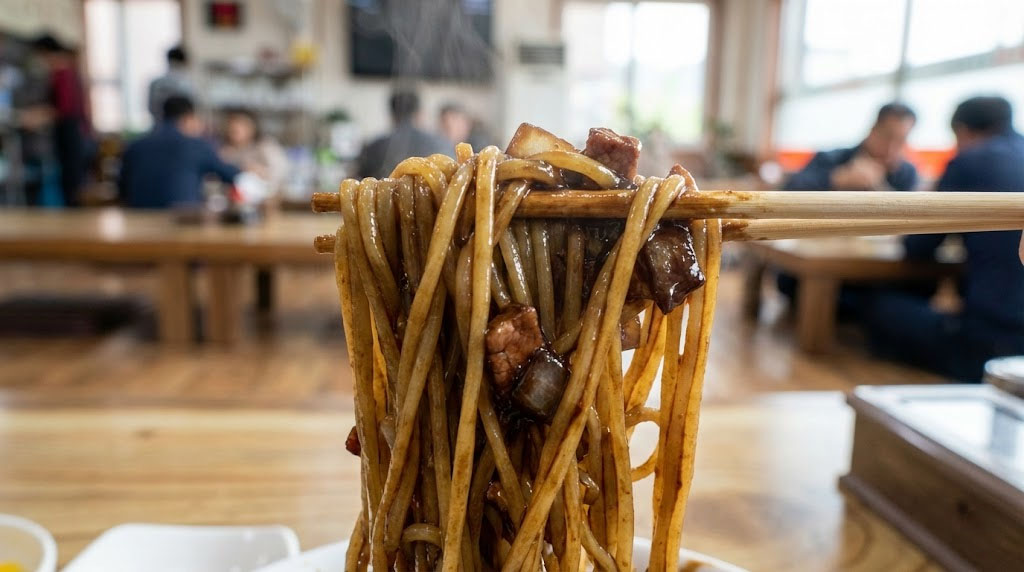
The black bean sauce is famously thick and heavy. If you try to mix it holding two chopsticks in one hand like standard noodles, your wrist will fatigue rapidly, and the dark sauce will likely splash onto your shirt.
Mastering the physical mixing technique is just as important as knowing why Koreans eat Jajangmyeon on moving day.
- How Locals Mix It: Take one chopstick in your left hand, and the other chopstick in your right hand. Stab them into the bowl and pull the noodles up and over, tossing the dish exactly like you would toss a heavy salad. This dual-wielding technique coats the noodles evenly in half the time without splashing.
Conclusion
The next time you see characters unpacking boxes on television, you will completely understand the cultural history behind why Koreans eat Jajangmyeon on moving day. You do not need to sign a new lease to try it yourself. Find a local Korean-Chinese restaurant, order a fresh bowl of Ganjajang, and do not forget the yellow radish.
🔜 Next Post Teaser
We have covered the heavy, savory main dishes and the traditional restaurant culture. But what happens when you step out of the restaurant and into the modern, fast-paced streets of Seoul?
If you walk into a “CU” or “GS25” convenience store during the humid summer months, you will see a massive freezer entirely dedicated to plastic cups filled with ice, paired with colorful liquid pouches. It is not cheap juice for kids. It is the trendiest, most efficient way to drink premium coffee, ades, and cocktails on the go.
Next up: [Korean Convenience Store Drink Hacks: 5 Viral “Ice Cup” Recipes]
🔙 Previous Post
← Previous Post [Blackpink Jennie Favorite Snack: The Viral “Banana Kick” Hack]